Growing Pains: How North Fulton's Suburban Boom Is Quietly Reshaping Your Family's Health
Growing Pains: How North Fulton's Suburban Boom Is Quietly Reshaping Your Family's Health
North Fulton County has long been one of metro Atlanta's most desirable places to live. Excellent schools, strong employment corridors, and a reputation for safe, family-friendly communities have drawn tens of thousands of new residents over the past decade. But behind the ribbon-cuttings and rising rooftops, a quieter story is unfolding — one that physicians and public health professionals at North Fulton Hospital are watching with growing attention.
Rapid suburban expansion carries real, measurable health consequences. Many of them are invisible until they aren't.
The Air You're Breathing Has Changed
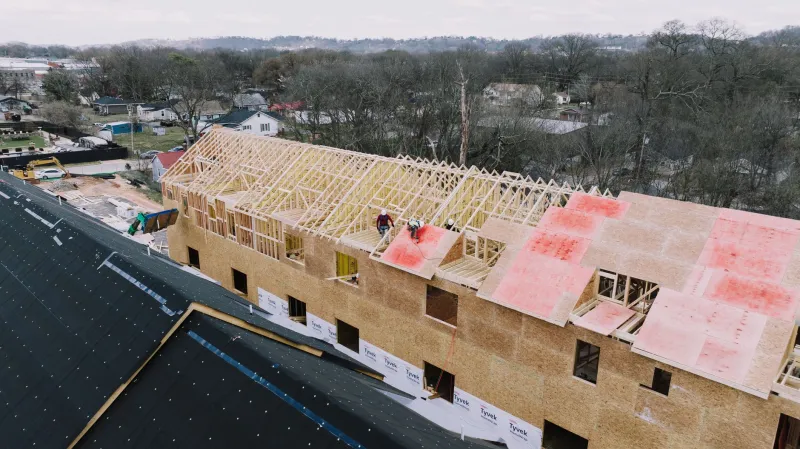
Construction is the most visible sign of a growing region, and it is also one of its most significant respiratory hazards. Active development sites generate substantial quantities of particulate matter — fine dust particles that can penetrate deep into the lungs and, over time, contribute to respiratory inflammation, aggravated asthma, and cardiovascular stress.
The Georgia Environmental Protection Division monitors air quality across the Atlanta metro region, and Fulton County regularly records elevated ozone and fine particle levels, particularly during warmer months. When large-scale grading, road construction, and land clearing occur simultaneously across multiple sites — as they frequently do in rapidly developing corridors like Alpharetta, Milton, and Roswell — the cumulative effect on local air quality is meaningful.
For families with children, older adults, or members who already manage asthma or chronic obstructive pulmonary disease, these spikes are not merely inconvenient. They can trigger acute episodes and contribute to long-term decline in lung function. Specialists at North Fulton Hospital recommend that residents living near active construction zones monitor the AirNow.gov daily air quality index, keep windows closed on high-particulate days, and speak with a primary care provider about whether an updated respiratory assessment is warranted.
Traffic Congestion and the Cardiovascular Burden Nobody Talks About
North Fulton's road network was not designed for its current population. As residential density has increased along corridors like GA-400 and Highway 9, commute times have lengthened considerably. What may feel like a routine frustration — sitting in traffic for forty-five minutes each way — is, according to a growing body of research, a genuine cardiovascular stressor.
Studies published in journals including the Journal of the American Heart Association have identified associations between long commutes and elevated blood pressure, increased levels of stress hormones such as cortisol, and a higher incidence of anxiety and depression. Traffic-related air pollution — specifically the ultrafine particles and nitrogen dioxide emitted by vehicles — adds a physiological dimension to this psychological burden. Residents who spend significant time in stop-and-go traffic are inhaling higher concentrations of these compounds than those in less congested environments.
The cardiologists and internal medicine physicians at North Fulton Hospital are increasingly asking patients about their daily commute patterns as part of a broader lifestyle assessment. If your commute has grown significantly in the past few years, that is worth discussing at your next appointment.
Green Space Is Disappearing — and That Matters More Than You Think
One of the less-discussed consequences of suburban development is the systematic reduction of green space. Parks, tree canopies, wetlands, and undeveloped land serve functions that go well beyond aesthetics. They filter air pollutants, reduce the urban heat island effect, absorb stormwater, and — critically — provide residents with accessible environments for physical activity and mental restoration.
As North Fulton's remaining undeveloped parcels are converted to residential and commercial use, the per-capita availability of green space decreases. Research from the field of environmental health consistently demonstrates that reduced access to nature correlates with higher rates of anxiety, depression, and stress-related illness. Children who lack access to outdoor play spaces show elevated markers of stress and diminished physical activity levels, which in turn affect healthy weight maintenance and cardiovascular development.
North Fulton Hospital encourages families to be deliberate about seeking out the green spaces that remain — Big Creek Greenway, Wills Park, and the Chattahoochee River National Recreation Area are all within reach for most county residents. Incorporating regular outdoor time into weekly routines is not a luxury; it is a documented component of cardiovascular and mental health.
The Mental Health Weight of a Region in Transition
Rapid change is inherently disorienting. Long-term residents of North Fulton County frequently describe a sense of loss as familiar landmarks disappear, traffic patterns shift, and the character of their neighborhoods transforms. Newcomers, meanwhile, often arrive without established social networks, navigating unfamiliar communities while managing the stresses of relocation.
This combination — disrupted community identity for established residents and social isolation for newer arrivals — creates conditions that are well-documented precursors to chronic stress, anxiety, and depression. The behavioral health team at North Fulton Hospital has observed increased demand for mental health services among adults in the region, a trend consistent with broader data on rapidly growing suburban communities across the southeastern United States.
Recognizing these pressures as legitimate health concerns, rather than personal shortcomings, is an important first step. Patients experiencing persistent fatigue, difficulty sleeping, irritability, or a general sense of overwhelm that cannot be attributed to a specific cause are encouraged to speak candidly with their provider. These symptoms are not trivial, and they are not uncommon among residents navigating life in a fast-changing environment.
What Residents Can Do Right Now
Awareness is the foundation of proactive health management. North Fulton Hospital specialists recommend the following steps for families navigating life in a rapidly developing community:
- Monitor local air quality regularly. Use AirNow.gov or a reliable weather application that includes AQI data. On days when air quality is rated Unhealthy for Sensitive Groups or worse, limit outdoor exertion and keep windows closed.
- Schedule a cardiovascular baseline assessment. If you have not had a recent blood pressure check, cholesterol panel, or cardiovascular risk evaluation, speak with your primary care provider. Early identification of elevated risk factors allows for intervention before symptoms develop.
- Prioritize and protect outdoor activity. Seek out North Fulton's remaining parks and greenways. Physical activity in natural environments has been shown to yield greater mental health benefits than equivalent activity indoors.
- Have an honest conversation about stress. If the pace and pressures of life in a growing community are affecting your mood, sleep, or relationships, raise it with your physician. North Fulton Hospital offers access to behavioral health resources for patients who need additional support.
- Stay engaged with local planning processes. Community advocacy for green space preservation, pedestrian infrastructure, and air quality monitoring is a form of public health action. Residents who participate in local planning decisions help shape the health environment for their entire community.
Compassionate Care in a Changing Community
North Fulton Hospital is committed to meeting the needs of this community at every stage of its evolution. As the region grows, so does the complexity of the health challenges our patients face. Our physicians, specialists, and care teams are here to help residents not only respond to illness, but to understand and navigate the environmental and lifestyle factors that shape their long-term wellbeing.
If you have concerns about how North Fulton's growth may be affecting your family's health, we encourage you to schedule an appointment with a primary care provider. Compassionate, informed care is available — and it begins with a conversation.